
 ARGOMENTI
IN EVIDENZA
route du rhum ambrogio beccaria protagonist francesca clapcich rs aero alinghi campionati invernali rs21 open skiff cnsm vela oceanica
AMERICA'S CUP
America’s Cup Wins Sports Emmy Award
redazione
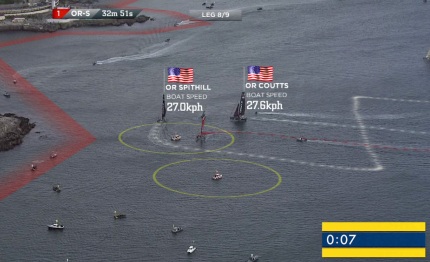
America’s Cup groundbreaking use of Liveline, the technology that makes competitive sailing accessible to home viewers worldwide, has been awarded an Emmy for extraordinary technical innovation. LiveLine technology, which is used for American football and NASCAR car racing broadcasts, is being recognized for making the sport welcoming to new fans and providing precise data for race management.
“We’re honored by this award. At the core, this team’s efforts are driven by a passion for sports and connecting people to sports they otherwise might not have the opportunity to view,” said Stephen Barclay, interim CEO, America’s Cup Event Authority. “Stan Honey (America’s Cup Director of Technology) and the rest of the team are to be commended for their role in developing this technology that is assisting America’s Cup to be broadcast internationally. This Emmy recognizes that this technology helps new fans and veteran racers to enjoy a spectacular visual experience in a way never before imagined.”
The sport of sailing is growing internationally, and America’s Cup organizers are invested in constantly improving the spectator experience. LiveLine superimposes graphics on the screen as a technical aid for viewers, like ahead-behind lines that enable audiences to clearly see who is leading the race and race-course boundaries. Spectators will recognize the technology from other Sportvision products, like the yellow first-down line use in the NFL and the Race/FX tracking and highlighting system used in NASCAR.
The technology was developed exclusively for America’s Cup broadcasts by the America’s Cup Event Authority, Sportvision and NBC Sports Network and does what was previously impossible: overlay geo-positioned lines and data streams at two centimeter accuracy on live race course video shot from rapidly moving helicopter and water-based platforms.
Driven by a GPS system that can track the America’s Cup catamarans to within a two-centimeter accuracy on the race course, event organizers leverage the system for on-the-water management of the sport. Telemetering of the course allows for rapid movement of marks and controlling course limits, while use of real-time overlap and zone-entry determinations enable umpires to make the most accurate decisions ever possible.
The team that developed the technology is made up of Director of Technology Stan Honey, LiveLine Project Manager Ken Milnes, Onboard Media Manager Mark Sheffield, and key America’s Cup management personnel including Denis Harvey, Richard Worth, Gary Lovejoy and Tim Heidmann; and Sportvision team members Jim McGuffin and Alan Trimble.
The George Wensel Technical Achievement Award from the National Academy of Television Arts and Sciences was presented on Monday, April 30, 2012 at the Frederick P. Rose Hall at the Lincoln Center in New York City. Others considered for the award included Hot Trax/Hot Spot, used by the Fox network for NASCAR and baseball telecasts, the Diamond Platform, used by baseball's MLB Network, and ESPN's 3-D coverage of the Masters golf tournament.
01/05/2012 10:21:00 © riproduzione riservata
Tweet
ARTICOLICORRELATI
I PIU' LETTIDELLA SETTIMANA
A Cagliari dal 6 all'8 novembre l'Europeo Under 25 RS Aero a squadre
Dopo il Mondiale a squadre OpenSkiff, concluso con la vittoria della Francia e l'argento dell'Italia, torna la vela internazionale nelle acque di Su Siccu. Squadre miste con un ragazzo e una ragazza, Monaco difende il titolo europeo
Route du Rhum: Beccaria insegue, Horeau scappa, Clapcich è terza
Il francese Corentin Horeau ha costruito un vantaggio di oltre 185 miglia nella classe IMOCA, ma alle sue spalle la flotta recupera terreno. Ambrogio Beccaria è in lotta per il podio, mentre Francesca Clapcich occupa la terza posizione
Route du Rhum: Ambrogio Beccaria racconta il suo incidente
Raggiunte le Azzorre domenica 8 novembre, gli accertamenti medici hanno escluso fratture: si tratta di una forte contusione muscolare alla gabbia toracica
Route du Rhum: per Francesca Clapcich poche vele e tanta grinta
Ieri il bompresso di 11th Hour Racing ha ceduto. Ma oggi è un altro giorno, e Francesca ha parlato del suo obiettivo per il resto della regata: arrivare al traguardo nella migliore posizione possibile
Route du Rhum: Laperche vede il traguardo, Beccaria costretto al ritiro
Il francese ha quasi 400 miglia di vantaggio su Coville e potrebbe festeggiare la vittoria sabato. Brutta giornata per gli italiani: Ambrogio Beccaria abbandona per un infortunio, Francesca Clapcich perde il bompresso e scivola al quarto posto
Checco Bruni, un emigrante "coi fiocchi"
Da Luna Rossa ad Alinghi, il velista siciliano prende la via della Svizzera dove ricoprirà il ruolo di skipper che in Luna Rossa gli era precluso dai giovani emergenti. Per Tudor Team Alinghi una grande iniezione di esperienza e di sapienza velica
Tom Laperche, trionfo e record: la Route du Rhum è sua
Il francese di SVR-Lazartigue domina la classe Ultim alla prima partecipazione e chiude la traversata in 6 giorni, 13 ore, 27 minuti e 40 secondi. Battuto di oltre sei ore il primato di Charles Caudrelier. «È un sogno d'infanzia che si realizza»