
 ARGOMENTI
IN EVIDENZA
salone di genova open skiff optimist vela paralimpica class 40 vele d'epoca windsurf regate protagonist sailgp 52 super series
AMERICA'S CUP
Coutts and Peyron tell transformative tale at Global Sports Forum
redazione
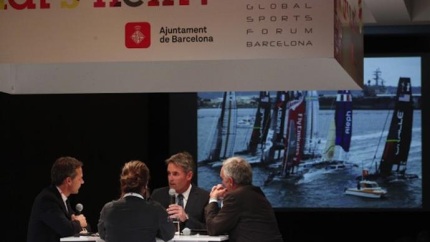
ORACLE Racing CEO Russell Coutts and Energy Team skipper Loïck Peyron addressed the question, 'Sailing: what's next?', on a panel at the Global Sports Forum in Barcelona on Friday.
Both men emphasized the transformative nature of the changes to this edition of the America's Cup and how they will help to draw in both younger participants and a younger audience, with new broadcast initiatives and an incredibly exciting new class of boat to race.
“When you think about where sailing was until recently, it’s not such a massive leap of imagination to realise the old methods were not going to continue to work,” Coutts said, explaining the thinking behind the changes. “Look at the way it was televised and the amount of delays there were in the races in those slow boats. Frankly the broadcasters didn’t even have an idea of how long the races were going to last for.
“Just imagine going to a broadcaster and not being able to tell them how long a race would be going on for? What we are seeing in sailing today is a real revolution and there is a lot of good work going on to reinvent what is a wonderful sport.”
Shorter races, close to shore, in full view of the public, along with transformative television coverage are the pillars of the changes, Coutts said. And then there are the boats.
Loïck Peyron, long an accomplished multihull sailor, spoke about the switch to wing-sailed catamarans with unbridled enthusiasm:
"Why multihull? Well, when you see an F1 driver, you don't say, 'I'm also a driver' because you have a car. You just don't think like that. And it should be the same when you see top level sailing. We have to focus on the high level skills needed to sail these boats. Many people love to sail and to cruise, but very few know how to race and only the smallest fraction can win races on boats like these. With multihulls, every time you make a mistake, it can be quite spectacular."
Coutts agreed. "I think people will recognize the skill involved in trying to get one of these boats around the course, let alone trying to beat the hell out of each other and push it to the absolute limits and sometimes beyond."
He also said the new boats and new format demanded a new breed of sailor and already this has brought an injection of new blood into the Cup.
"We're already seeing some of the great Olympic sailors like Ben Ainslie (BAR), Iain Percy (Artemis Racing), and Nathan Outteridge (Team Korea), coming in and making their mark. Up until now there have been a lot of older people involved in the racing, but now, with the boats becoming much more athletic, you have to react much quicker and it's bringing in a new style of sailing and a new type of sailor," he said.
"We're really bringing out the athletic side of the sport… These boats are very physically demanding and I think that's a good thing for the future." - ph. © Global Sports Forum
11/03/2012 02:05:00 © riproduzione riservata
Tweet
ARTICOLICORRELATI
I PIU' LETTIDELLA SETTIMANA
Trans Benaco, i Melges 32 dominano la 40ª edizione: Wilma firma il successo del quarantennale
A conquistare il titolo della 40ª Trans Benaco Cruise Race è stato Wilma (GER 193), Melges 32 armato dal Circolo Vela Torri e timonato da Carlo Cavagna, capace di completare le due prove con un tempo complessivo di 7 ore, 30 minuti e 22 secondi
Il Mondiale OpenSkiff entra nel vivo: a Calasetta una flotta ricca di medaglie
Tra i 166 registrati diversi protagonisti delle ultime edizioni iridate. Grande attesa per la squadra italiana, oltre che per gli atleti della Lega Navale Italiana Sezione Sulcis, organizzatore dell'evento
Si conclude a Capodimonte il Trofeo Optimist Italia
Il vento detta i tempi di questa ultima giornata e la terza tappa si chiude con un totale di sei prove svolte
Trofeo Optimist Italia: Pasquini e Pucci partono al comando sul Lago di Bolsena
Nella Divisione A il primo leader della classifica è Massimo Pasquini (LNI Ostia), autore di una serie molto regolare (8-5-1); nella Divisione B Valerio Pucci (Circolo Nautico Marina di Carrara) ha preso il comando grazie ai parziali di 1-1-5
52 SUPER SERIES: Trinity rompe il dominio ma Sled allunga a Lanzarote
Il comitato di regata ha sfruttato una breve finestra meteorologica per far disputare una regata intensa, nella quale Trinity Racing ha conquistato il primo successo stagionale, mentre Sled ha consolidato la leadership dell'evento
Golden Globe Race: in sei danno forfait prima della partenza
A 47 giorni dal via del 6/9, ben sei skipper hanno rinunciato al sogno di prendere parte alla regata più estrema della vela oceanica, mentre altri sei stanno attraversando l'Atlantico cercando di completare in tempo la qualificazione obbligatoria
Optimist, Bolsena: seconda giornata da incorniciare al Trofeo Optimist Italia
Trofeo Optimist Italia Kinder Joy of Moving: Tabacco conquista il primato nella Divisione A e Valerio Pucci resta in testa nella Divisione B
Iniziato il Mondiale Openskiff a Calasetta: 3 prove con maestrale
Tre regate, vento da nord ovest tra i 14 e i 17 nodi, un’onda mai complicata e soprattutto divertente. Il Campionato del Mondo OpenSkiff 2026 è iniziato nel migliore dei modi a Calasetta
SailGp: luci e ombre a Portsmouth per Red Bull Italy
Roma studia l'organizzazione inglese per prepararsi al SailGP di Ostia 2027. Presente a Portsmouth Alessandro Onorato, Assessore ai Grandi Eventi, Sport, Turismo e Moda di Roma Capitale
52 Superseries: a Marina Rubicón Paprec vince al fotofinish
La terza tappa delle 52 SUPER SERIES si decide tra Ocs, manovre millimetriche, penalità e vento forte: Platoon domina tutte e due le prove, Alkedo brilla e poi paga per la falsa partenza, Sled perde contatto, Paprec vince per la costanza di risultati