
 ARGOMENTI
IN EVIDENZA
salone di genova open skiff optimist vela paralimpica class 40 vele d'epoca windsurf regate protagonist sailgp 52 super series
PRESS
Les Voiles de Saint-Tropez: classic in every sense
redazione
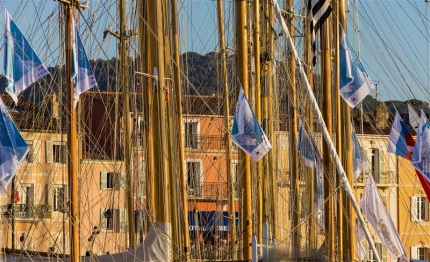
Around 300 yachts will grace the 14th edition of Les Voiles de Saint-Tropez, one of world’s most captivating nautical spectacles taking place this week. The cosmopolitan fleet comprises both modern and vintage designs representing over a century of yachting history. The most inspiring racing will be within the Tradition division reserved for yachts built prior to 1976 and one or two replicas accepted as conforming sufficiently to an appropriate and original design. Of the 139 entries registered in this category, some 55 will compete for the Rolex Trophy, a coveted prize awarded since 2006 to the best performing Tradition yacht measuring over 16 metres on deck.
A glance at the Rolex Trophy entry list is a mildly head-spinning affair: yachts dating from the 1890s, names more reminiscent of romantic literature than nautical prowess, and a bewildering array of types. The season-ending Les Voiles de Saint-Tropez is one of the biggest regattas in the Mediterranean and certainly one of the most diverse in terms of type of boat. Eligibility for the Tradition division and, by implication, the Rolex Trophy is controlled by the Comité International de la Méditerranée (CIM), and their two measurers Roger Gibert and Renaud Godard.
Initially, the entire Les Voiles fleet is divided by age and material of hull construction. The Tradition division includes all yachts launched prior to 31 December1975 that are built of wood or metal. All others from 1976 forward, and all yachts built of fibreglass or other contemporary materials, race in the Modern division.
Then, within the Tradition division, there is a further distinction based on age. All eligible boats launched between1950 and 1975 are considered “classique”; those launched prior to 1950 are considered “époque”. Thereafter boats are sub-divided according to their size, rating and type of rig configuration, for example: Grande Epoque (the largest schooners and gaff rigged yachts, all over 30 metres in length), 15 Metre (yachts conforming to the15 Metre International Rule), Epoque Aurique (gaff rigged yachts), and Classique or Epoque Marconi (Bermudian rigged yachts - loosely those with triangular sails). The intention throughout is to promote fair, competitive racing throughout the diverse fleet.
Three past recipients of the Rolex Trophy are in attendance including last year’s winner, the 57-foot Avel, owned by the Gucci family; the winner in 2010, Ikra, synonymous with the event being one of the two boats in 1981 to engage in a seemingly innocent sporting challenge from which sprang La Nioulargue and then Les Voiles; and, Rowdy, the winner in 2008 and 2009.
While the Modern yachts – cutting edge demonstrations of carbon fibre, speed and power – will contest five days of coastal races, the Tradition division engages in four days of fleet racing. Some 4,000 crew are expected to participate, a number swelled ashore by an enthusiastic public drawn to watching this magnificent spectacle at close hand.
The week of competition will close on Sunday, 7 October with the prize-giving at the 16th-century Citadelle overlooking the port. Among the many prizes presented, the winner of the Rolex Trophy will be awarded a Rolex timepiece.
Photo Credit: Carlo Borlenghi
02/10/2012 12:45:00 © riproduzione riservata
Tweet
ARTICOLICORRELATI
I PIU' LETTIDELLA SETTIMANA
Trans Benaco, i Melges 32 dominano la 40ª edizione: Wilma firma il successo del quarantennale
A conquistare il titolo della 40ª Trans Benaco Cruise Race è stato Wilma (GER 193), Melges 32 armato dal Circolo Vela Torri e timonato da Carlo Cavagna, capace di completare le due prove con un tempo complessivo di 7 ore, 30 minuti e 22 secondi
Il Mondiale OpenSkiff entra nel vivo: a Calasetta una flotta ricca di medaglie
Tra i 166 registrati diversi protagonisti delle ultime edizioni iridate. Grande attesa per la squadra italiana, oltre che per gli atleti della Lega Navale Italiana Sezione Sulcis, organizzatore dell'evento
Si conclude a Capodimonte il Trofeo Optimist Italia
Il vento detta i tempi di questa ultima giornata e la terza tappa si chiude con un totale di sei prove svolte
Trofeo Optimist Italia: Pasquini e Pucci partono al comando sul Lago di Bolsena
Nella Divisione A il primo leader della classifica è Massimo Pasquini (LNI Ostia), autore di una serie molto regolare (8-5-1); nella Divisione B Valerio Pucci (Circolo Nautico Marina di Carrara) ha preso il comando grazie ai parziali di 1-1-5
52 SUPER SERIES: Trinity rompe il dominio ma Sled allunga a Lanzarote
Il comitato di regata ha sfruttato una breve finestra meteorologica per far disputare una regata intensa, nella quale Trinity Racing ha conquistato il primo successo stagionale, mentre Sled ha consolidato la leadership dell'evento
Golden Globe Race: in sei danno forfait prima della partenza
A 47 giorni dal via del 6/9, ben sei skipper hanno rinunciato al sogno di prendere parte alla regata più estrema della vela oceanica, mentre altri sei stanno attraversando l'Atlantico cercando di completare in tempo la qualificazione obbligatoria
Optimist, Bolsena: seconda giornata da incorniciare al Trofeo Optimist Italia
Trofeo Optimist Italia Kinder Joy of Moving: Tabacco conquista il primato nella Divisione A e Valerio Pucci resta in testa nella Divisione B
Iniziato il Mondiale Openskiff a Calasetta: 3 prove con maestrale
Tre regate, vento da nord ovest tra i 14 e i 17 nodi, un’onda mai complicata e soprattutto divertente. Il Campionato del Mondo OpenSkiff 2026 è iniziato nel migliore dei modi a Calasetta
SailGp: luci e ombre a Portsmouth per Red Bull Italy
Roma studia l'organizzazione inglese per prepararsi al SailGP di Ostia 2027. Presente a Portsmouth Alessandro Onorato, Assessore ai Grandi Eventi, Sport, Turismo e Moda di Roma Capitale
52 Superseries: a Marina Rubicón Paprec vince al fotofinish
La terza tappa delle 52 SUPER SERIES si decide tra Ocs, manovre millimetriche, penalità e vento forte: Platoon domina tutte e due le prove, Alkedo brilla e poi paga per la falsa partenza, Sled perde contatto, Paprec vince per la costanza di risultati